
Key Takeaways
- Book your entry ticket and circuit early to guarantee access
- Choose a circuit that matches your fitness and interests
- Start early and pack for rapid weather changes
- Use the shuttle bus from Aguas Calientes and consider a guide
things to do in machu picchu include exploring the Inca citadel, following a designated walking route, and taking time to enjoy the mountain scenery. This remarkable archaeological site is in Peru’s Cusco region, above the town of Aguas Calientes, also called Machu Picchu Pueblo.
A visit takes planning because entry is controlled, routes are assigned, and the journey usually involves a train or a multi-day trek. With a little preparation, you can spend less time worrying about logistics and more time appreciating this extraordinary place.
Use this guide to choose what to see, plan transport, find local food, and prepare for the altitude and changeable mountain weather.
20 Things to Do in Machu Picchu and Practical Tips
Tip 1 – Book your entry ticket and circuit early

Entry is limited, and tickets are sold for specific dates and circuits. Check the current rules and availability through Peru’s Ministry of Culture before arranging trains and accommodation. Popular dates and special mountain routes can sell out well ahead, particularly in the dry season.
Read the ticket details carefully. A standard citadel ticket does not necessarily include access to Huayna Picchu or Machu Picchu Mountain, which require separate tickets and have their own routes and limits.
Tip 2 – Choose the circuit that matches your interests
Visitors follow one of several signed circuits, and you cannot freely wander across the whole site. Routes vary in length, viewpoints, and access to archaeological areas. Check the current circuit map when booking and consider your fitness, time, and priorities before choosing.
If the classic postcard view matters most, confirm that your selected ticket includes a suitable viewpoint. Routes and regulations can change, so rely on current ticket information rather than an old itinerary or social media post.
Tip 3 – Start early, but plan for the weather

Morning entry can offer cooler temperatures and a quieter feel, but mist is common and may hide the mountains for a while. Later visits can bring clearer views, though they may also feel busier. Choose an entry time that works with your train and bus connections, and allow extra time for delays.
The weather changes quickly in this Andean setting. Bring a light waterproof layer even if the forecast looks sunny, and be patient if clouds move across the peaks.
Tip 4 – Spend time at the main viewpoints
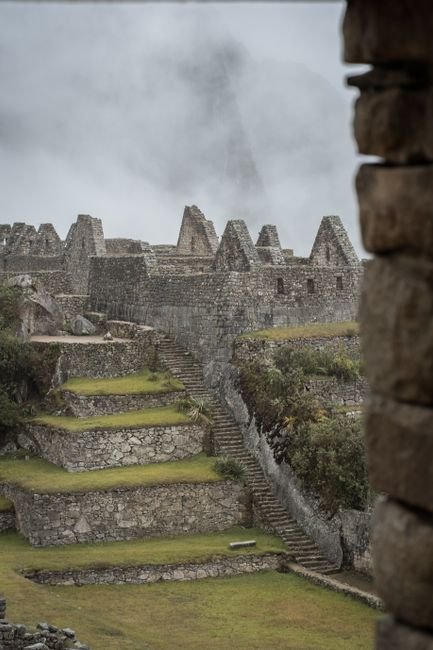
Pause at the viewpoints allowed by your circuit rather than rushing straight through the ruins. From above, you can take in the terraces, stone buildings, and steep green ridges around the citadel. The familiar wide view is impressive, but shifting clouds and light can make each stop feel different.
Follow staff directions and stay on the marked path. Some popular photo angles are not accessible from every circuit, so check your route before you arrive if photography is a priority.
Tip 5 – Look closely at the stonework and terraces
Machu Picchu is more than a collection of scenic overlooks. Notice how carefully fitted stones form walls, doorways, and ceremonial spaces, and how agricultural terraces follow the steep slopes. A guide can help explain the site’s engineering and cultural history without reducing the visit to a list of photo stops.
Do not climb on walls or touch fragile surfaces. Keeping to the designated route helps protect the site for future visitors.
Tip 6 – Hire a guide if you want more historical context
A licensed local guide can explain the buildings, landscape, and history of the Inca site. You may be able to arrange a guide in Aguas Calientes or near the entrance, but booking in advance is useful during busy periods. Confirm the guide’s language, duration, price, and whether the service covers your chosen circuit.
If you prefer to explore independently, read about the site beforehand and bring a downloaded map or notes. Mobile data may be unreliable, and the marked route is more important than a phone signal once inside.
Tip 7 – Take the bus up from Aguas Calientes

The shuttle bus climbs from Aguas Calientes to the entrance on a winding mountain road. It is the simplest choice for many visitors, especially those with limited time or mobility. Check the current bus arrangements and allow for queues at both ends of the ride.
You can hike up or down on a steep path, but it takes effort and can be slippery after rain. Do not choose the walk just to save time if you have a tight entry slot or onward train to catch. Check the Consettur bus service information for current details.
Tip 8 – Explore Aguas Calientes before or after your visit
Aguas Calientes is the small riverside town that serves as the main base for visiting the citadel. Take a walk along the river, browse the artisan market, and look around the central streets before heading uphill. The town is busy and compact, so staying close to the station can make an early start easier.
It is often called Machu Picchu Pueblo on signs and maps. Give yourself enough time to find your hotel, confirm your bus or train arrangements, and have a meal before your site visit.
Tip 9 – Visit the Manuel Chávez Ballón Site Museum
The Manuel Chávez Ballón Site Museum sits below the citadel and offers background on the archaeological site and its discoveries. It can be a worthwhile stop if you have time in Aguas Calientes, especially before your visit, when the displays can help you recognize features on your route.
Check its current opening hours and access arrangements before going. Museum visits are best planned around your train and entry time rather than squeezed into a tight schedule.
Tip 10 – Consider an additional mountain hike

Huayna Picchu and Machu Picchu Mountain offer steep uphill walks and elevated views, but each requires the correct ticket and adds time and physical effort. Choose one only if you are comfortable with uneven steps, exposed sections, and changing weather. Check age limits, route conditions, and entry rules when booking.
These hikes are not essential for enjoying the citadel. If you would rather take a slower visit, a standard circuit may be a better fit.
Tip 11 – Learn about the Inca Trail and other trekking routes
For a longer approach, the Inca Trail combines mountain scenery, archaeological remains, and a final arrival at Machu Picchu. Permits and guided arrangements are limited and need to be organized well in advance through an authorized operator. Other treks in the Cusco region follow different routes and do not all enter through the same gate.
Ask what the trek includes, how luggage is handled, and what happens if weather or trail conditions change. A multi-day hike is a different kind of trip from taking the train to Aguas Calientes.
Tip 12 – Try local food in Aguas Calientes
Restaurants in Aguas Calientes serve Peruvian favourites and dishes aimed at international visitors. Look for soups, grilled trout, potatoes, corn, and regional ingredients. Prices near the station and central streets can be higher than in Cusco, so check a menu before sitting down.
For a quick meal, bakeries and small cafés can be convenient. Carry water for the journey, but follow site rules about what you may bring into the citadel and take all rubbish back with you.
Tip 13 – Build in time to adjust to the altitude

Machu Picchu is lower than Cusco, but many visitors travel through Cusco or other high-altitude places on the way. If your itinerary allows, take it easy when you first arrive in the region. Rest, drink water, avoid overexertion, and pay attention to how you feel.
Altitude affects people differently. If you feel seriously unwell, seek local medical advice rather than trying to push through a hike. Visitors with health concerns should speak with a medical professional before travelling.
Tip 14 – Pick a season that suits your priorities
The drier months, generally from May to September, are popular for clearer walking conditions, but they can also bring larger crowds. The wet season, roughly from November to March, can mean more rain, muddy paths, and cloud, though the landscape is lush. Conditions vary from year to year.
April and October can be useful shoulder-season options, but weather is never guaranteed. Check forecasts and any official closures close to your travel dates, and keep your plans flexible where possible.
Tip 15 – Make the train ride part of the journey
Many visitors travel from Cusco or the Sacred Valley by train to Aguas Calientes. Compare departure stations, journey times, luggage allowances, and ticket conditions before booking. The views along the route are a highlight, but train services and schedules can change.
Leave a sensible gap between your visit and your return train. A queue for the bus or unexpected delay can make a very tight connection stressful. Check current timetables with PeruRail or your chosen rail operator.
Tip 16 – Pack for a day of walking
Bring comfortable shoes with good grip, a light rain jacket, sun protection, and any medication you need. A small day bag is easier to manage than a large backpack. Check current site rules for bag sizes and prohibited items before setting out.
Carry a refillable water bottle if permitted under the current rules, and pack out any rubbish. Insect repellent can be useful in the warmer, humid surroundings, while a hat and sunscreen help in strong sun.
Tip 17 – Keep your plans and tickets available offline
Save your entry ticket, train details, hotel address, and operator contact information to your phone before leaving Cusco. A printed backup can be useful if your battery runs low. Mobile coverage may be patchy, so do not rely on being able to load every booking at the entrance.
Use your rail operator’s official app or website for schedule updates where available. Download maps and key information in advance, and carry a power bank if you need your phone for tickets or communication.
Tip 18 – Respect site rules and local customs
Follow signs and staff instructions, stay on your assigned route, and never remove stones, plants, or other objects. Do not feed wildlife or leave food behind. Rules on photography equipment, bags, and food can change, so check current guidance before your visit.
Ask before photographing local people, especially in town or at markets. A friendly “buenos días” means good morning, while “gracias” means thank you. Spanish is widely used, and you may also hear Quechua in the region.
Tip 19 – Plan for families and different fitness levels
Families should choose a circuit and entry time that suit children’s walking pace, and pack snacks for the journey in line with current site rules. There are steep steps and uneven surfaces, so the citadel may not be suitable for every visitor with limited mobility. Confirm access details with the official ticket provider before booking.
If someone in your group needs a slower day, consider spending more time in Aguas Calientes rather than adding a strenuous mountain hike. A relaxed plan is often more enjoyable than trying to fit in every possible activity.
Tip 20 – Avoid the most common planning mistake
A common mistake is booking a train without first securing a compatible entry ticket, or leaving too little time between the site visit and the return journey. Plan the visit in this order: confirm your entry date and circuit, book transport, then arrange accommodation and any extra hikes.
For the latest background on the archaeological site and its conservation, read the UNESCO World Heritage listing for Machu Picchu. For broader trip inspiration beyond Peru, you can also browse this guide to 20 Fun and Best things to do in gainsville.
Quick Reference for Visiting Machu Picchu
| Plan | Useful detail |
|---|---|
| Where it is | Cusco region, Peru, above Aguas Calientes, also called Machu Picchu Pueblo |
| Entry | Book an assigned ticket and circuit for a specific date and time |
| Getting there | Travel by train or organized trek, then use the shuttle bus or walk uphill |
| Best-known activities | Explore the citadel, visit viewpoints, take a guided walk, or book an extra mountain hike |
| Weather | Changeable mountain conditions; pack sun and rain protection |
| Useful base | Aguas Calientes for the station, hotels, meals, and bus access |
| Planning priority | Secure your entry ticket before finalizing transport times |
Visa & Entry Requirements
Entry rules for Peru depend on the passport you travel on and the government policies in effect for your travel dates. Visa-free stays, where available, and the maximum permitted length of stay are not the same for every nationality. Check the official information before paying for flights or making non-refundable bookings.
Confirm how long your passport must remain valid, whether you need blank pages, and whether you need a visa or electronic travel authorization. Requirements can change, and an airline may check your documents before boarding. Peru’s immigration authority provides official guidance through Peru’s National Superintendence of Migration. If details are unclear, contact a Peruvian embassy or consulate serving your country.
Be prepared to show travel details if requested. Depending on your circumstances, officials or airlines may ask for evidence of a return or onward journey, accommodation, or sufficient plans for your stay. Travel insurance is a sensible precaution for a trip that may include long-distance transport, altitude, and hiking, even when it is not an entry requirement.
Vaccination and health recommendations depend on your itinerary, medical history, and current public-health guidance. Check with a qualified travel-health provider before departure, especially if you will visit other parts of Peru beyond the Cusco region. Do not assume that a health document required in one situation applies to all visitors.
Customs rules also depend on what you bring into Peru. Check current restrictions for food, plants, medicines, cash, and other goods, and make any required declarations honestly. Keep prescriptions and supporting documents for personal medication. These points are general travel-planning guidance, not legal advice or a guarantee of admission. Recheck official government guidance shortly before departure, since immigration, passport, health, and customs policies can change.
FAQs About Things to Do in Machu Picchu
How many days should I plan for Machu Picchu?
Many visitors spend one night in Aguas Calientes and visit the citadel the next day. Allow more time if you want to hike an additional mountain, visit the museum, or travel at a slower pace. A longer stay also gives you more flexibility if transport is delayed.
Can I visit Machu Picchu without a guide?
Independent visits are possible when you have the correct ticket, but you must follow the assigned circuit and site rules. A guide can add helpful historical and cultural context. Check current entry requirements when you book because policies may change.
What are the best things to do in Machu Picchu for a first visit?
For a first visit, explore the circuit included with your ticket, spend time at its viewpoints, and consider hiring a knowledgeable guide. If you have extra time, visit the museum or walk around Aguas Calientes. Add a mountain hike only if you have booked the right ticket and feel comfortable with steep steps.
Is Machu Picchu suitable for children?
Many families visit, but routes include uneven ground and steps, and the day can involve early starts and long waits. Choose a suitable circuit, carry water and weather protection, and check age and access rules for any extra hike. Keep the schedule flexible for children.
Can I visit Machu Picchu on a budget?
You can control costs by comparing train options, choosing a simple guesthouse in Aguas Calientes, and avoiding optional hikes or premium services. Entry, transport, and food costs add up, so compare the full trip price rather than looking only at the train fare. Book early when possible.
What should I not bring into the citadel?
Rules can change, so check the current official guidance before packing. Large bags and certain items may be restricted, and visitors are expected to follow instructions, stay on marked routes, and take rubbish with them. A small, practical day bag is usually easier to manage.
Conclusion
The best things to do in Machu Picchu depend on your time, interests, and comfort with walking. A carefully chosen circuit, a good viewpoint, and a guide or museum visit can make the day memorable without overloading your schedule.
Book your entry ticket before arranging the rest of your visit, allow time for the journey through Aguas Calientes, and prepare for changing mountain weather. Respect the site rules and keep some flexibility in your plans.
With the right preparation, things to do in machu picchu can be more than a quick photo stop. You can experience the Inca citadel at a thoughtful pace and leave with a stronger understanding of this special place in Peru.
