
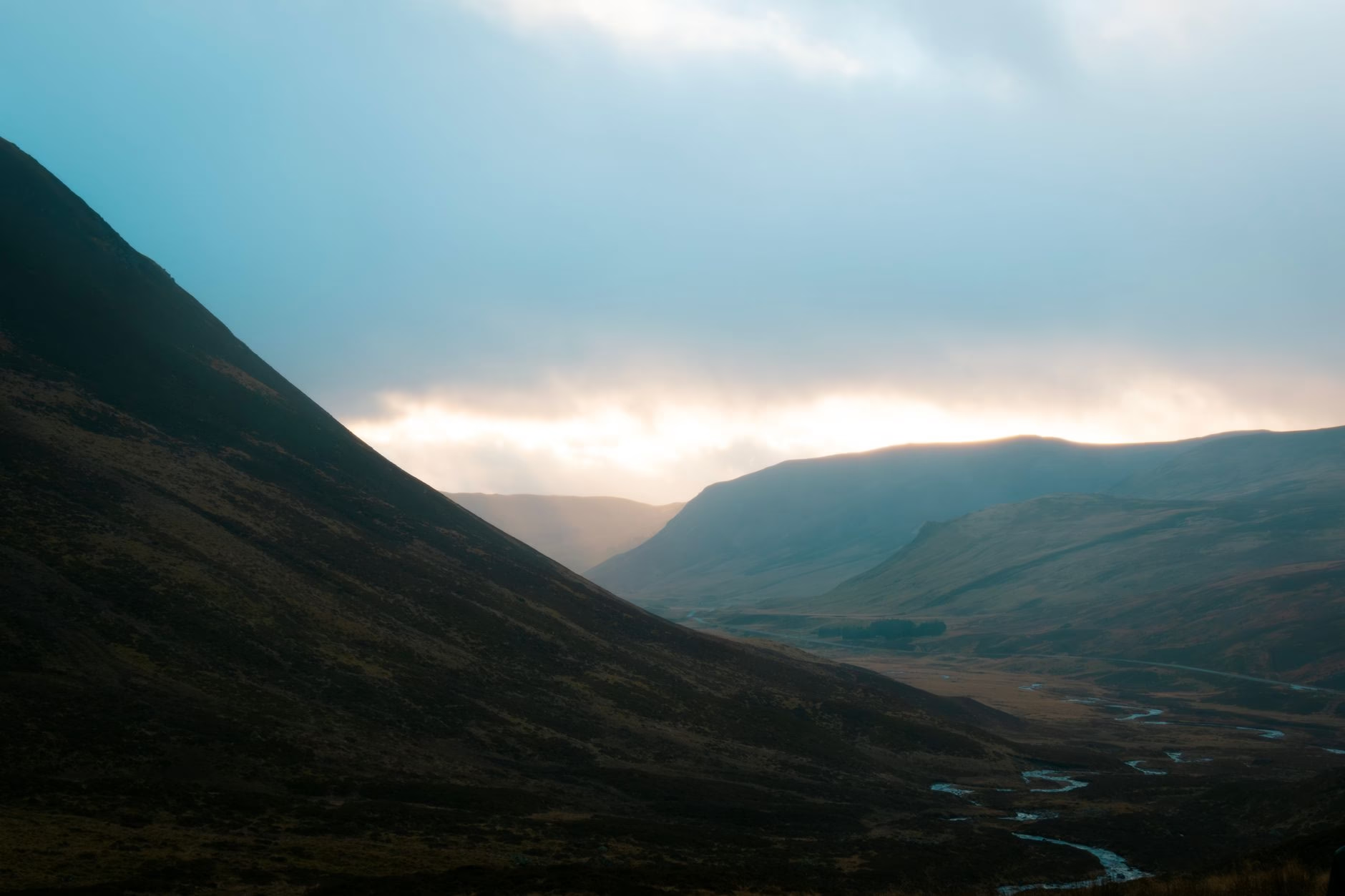
Why the Highlands Still Hold Secrets
The Scottish Highlands are famous for their dramatic peaks, mist‑shrouded lochs and the legendary “outdoor capital” of the UK. Yet beyond the well‑trodden routes of Loch Ness and Ben Nevis lies a quieter world of hidden valleys, secluded islands and tiny villages where the pace of life is dictated by the rhythm of the hills. For travelers who crave authenticity over crowds, these lesser‑known corners offer a chance to step off the tourist map and discover the raw, unfiltered beauty that has inspired poets and painters for centuries.
Glen Affric – The Lost Valley
Often described as Scotland’s most beautiful glen, Glen Affric feels like a secret kept by the mountains themselves. A short drive from the A82, the valley is framed by ancient Caledonian pine forests, lochs that mirror the sky, and the towering peaks of the Five Sisters of Kintail. The best way to explore is on foot – a network of well‑marked trails leads you from the tranquil shores of Loch Affric up through birch‑wooded slopes to the rugged ridge of Sgùrr na Dubh‑choire.
Because the area is a designated National Scenic Area, development is minimal. You’ll find modest bothies managed by the Mountain Bothies Association, providing shelter for those willing to embrace the simple life of a night on the floorboards. A gentle reminder to respect the “leave no trace” ethos ensures the forest remains a sanctuary for wildlife such as red deer, golden eagles and the shy Scottish crossbill.
- Must‑do walk: The 7‑mile loop from the Glen Affric car park to the viewpoint at Beinn Sgriabhach.
- Seasonal tip: Autumn brings a spectacular carpet of amber and gold across the forest floor.
- Practical note: The road can be narrow; larger vehicles may need to turn around at the parking area.
The Remote Isles of Harris and Lewis
While the Outer Hebrides are increasingly on the radar of adventure seekers, the islands of Harris and Lewis still retain a sense of isolation that feels otherworldly. The dramatic contrast between Harris’s rugged, mountain‑studded landscape and Lewis’s sweeping, low‑lying machair (flower‑rich coastal plains) creates a unique tapestry of scenery within a short ferry ride.
In Harris, the beaches of Luskentyre and Seilebost boast turquoise waters that rival any tropical shore, yet they are framed by cliffs that rise sharply from the sand. A short hike up to the viewpoint at the “White Sands” offers a panoramic vista that feels like a secret garden discovered by only a few.
Lewis, on the other hand, invites you to wander through prehistoric sites such as the Callanish Standing Stones. Even without a guide, the stones exude a quiet power; sunrise here is a ritual many travelers cherish. Small villages like Stornoway and the crofting settlement of Tarbert provide opportunities to sample freshly baked oatcakes and locally smoked salmon, often served in modest community cafés where the owners are happy to share stories of island life.
- Getting there: Ferries run regularly from Uig (Skye) to Tarbert (Harris) and from Stornoway to the mainland.
- Travel tip: Pack waterproof layers – the Atlantic can turn brisk quickly, even in summer.
- Experience: Join a local ceilidh (traditional dance gathering) if you’re lucky enough to be invited.
Assynt and the Storr of the North
In the far northwest of the Highlands, the region of Assynt reads like a geological textbook. Here, ancient quartzite peaks such as Suilven and Canisp rise abruptly from a sea‑level plain, creating silhouettes that have inspired countless photographers. The landscape feels almost lunar, with stone circles and ancient burial cairns scattered across the moorland.
Driving the single‑track roads that wind through Assynt, you’ll pass solitary farms where black cattle graze lazily under the watchful eye of a lone shepherd. The small village of Lochinver serves as a natural base; its harbor is a hub for tiny fishing boats, and the local seafood is as fresh as you’ll ever taste. From Lochinver, a short boat trip can take you to the tiny island of Eilean Fladday, a perfect spot for a quiet picnic and bird‑watching.
Hiking enthusiasts will love the “Storr of the North” – a ridge walk that leads you to a summit with a 360‑degree view of the Atlantic coastline, the Summer Isles and the distant peaks of the Northwest Highlands. Because the area is remote, you’ll often find the trails free of other walkers, granting a sense of personal communion with the landscape.
The Cairngorms’ Lesser‑Known Trails
The Cairngorms National Park is famous for its ski resorts and the towering plateau of the Cairngorms range. Yet beyond the well‑marked routes around Aviemore lies a network of quieter paths that reveal the park’s softer side. The Glenmore Forest Park, for example, offers a series of low‑impact loops that wind through mixed woodland, alongside gentle streams where trout dart beneath the surface.
One hidden gem is the path to the “Mossy Cairn” – a stone circle perched on a gentle rise above the River Dee. It is less visited than the more famous circles in the south, allowing you a moment of reflection amidst the ancient stones without the usual crowds. In late spring, the forest floor bursts into a carpet of bluebells, creating a scene straight out of a storybook.
For a truly off‑beat experience, consider a night walk under the stars. The park’s dark‑sky reserve status means that, on clear evenings, the Milky Way sweeps across the highlands in spectacular fashion. Just be sure to carry a reliable torch and check weather conditions before setting out.
Loch Maree and the Ancient Forest
Located on the edge of the Cairngorms, Loch Maree is a vast, mirror‑like body of water surrounded by pine‑clad hills and a series of islands that feel almost untouched. The loch is a haven for birdwatchers; ospreys and golden eagles are regular visitors, especially during the summer breeding season.
The surrounding forest, known as the “Maree Forest”, is one of the few remaining remnants of the ancient Caledonian pinewoods that once covered much of Scotland. Walking the quiet trails here, you’ll come across the iconic “Cairn of the Bear” – a natural cairn formed from stones that have been gathered over centuries, offering a perfect spot for a picnic with a view of the loch’s islands.
Because the area is managed by Forestry and Land Scotland, there are several modest visitor centres providing information on the local ecology and history. They also organize seasonal talks on topics such as the reintroduction of native species and the significance of the loch in Scottish folklore.
- Ideal activity: Rent a small boat from the loch’s modest dock for a gentle paddle among the islands.
- Wildlife tip: Dawn is the best time to spot ospreys nesting on the cliffs.
- Accessibility: The main trail from the car park is suitable for most fitness levels.
Cultural Gems: Small Villages and Traditions
Beyond the natural wonders, the Highlands’ true heart beats in its villages, where Gaelic language and traditional music still thrive. Places like Dornoch, with its historic cathedral and sandy beach, invite a leisurely stroll along the promenade while you soak up the gentle sea breeze. In the village of Plockton, colourful cottages hug the shoreline, and the locals are known for their warm hospitality and willingness to share a dram of locally distilled whisky.
If you’re lucky enough to visit during a local festival – such as the Braemar Gathering in August or the Apple and Pear Festival in Strathdon – you’ll witness a vibrant display of Highland culture. Traditional Highland games, piping competitions and ceilidhs fill the streets with music, laughter and the scent of fresh oatcakes.
Staying in a family‑run B&B or a converted croft can deepen your connection to the area. Hosts often provide insight into local customs, suggest hidden walking routes and may even invite you to join in a home‑cooked meal featuring regional specialties like venison stew or haggis cooked over an open fire. These personal touches transform a simple visit into an unforgettable immersion.
Whether you’re chasing mist‑covered lochs, exploring ancient forests or learning a few Gaelic phrases from friendly locals, the Scottish Highlands hold countless hidden gems waiting to be discovered. By venturing off the main thoroughfares and embracing the slower rhythm of these remote corners, you’ll return home with stories that feel like secret treasures – and perhaps a longing to return to the wild, beautiful heart of Scotland.
