
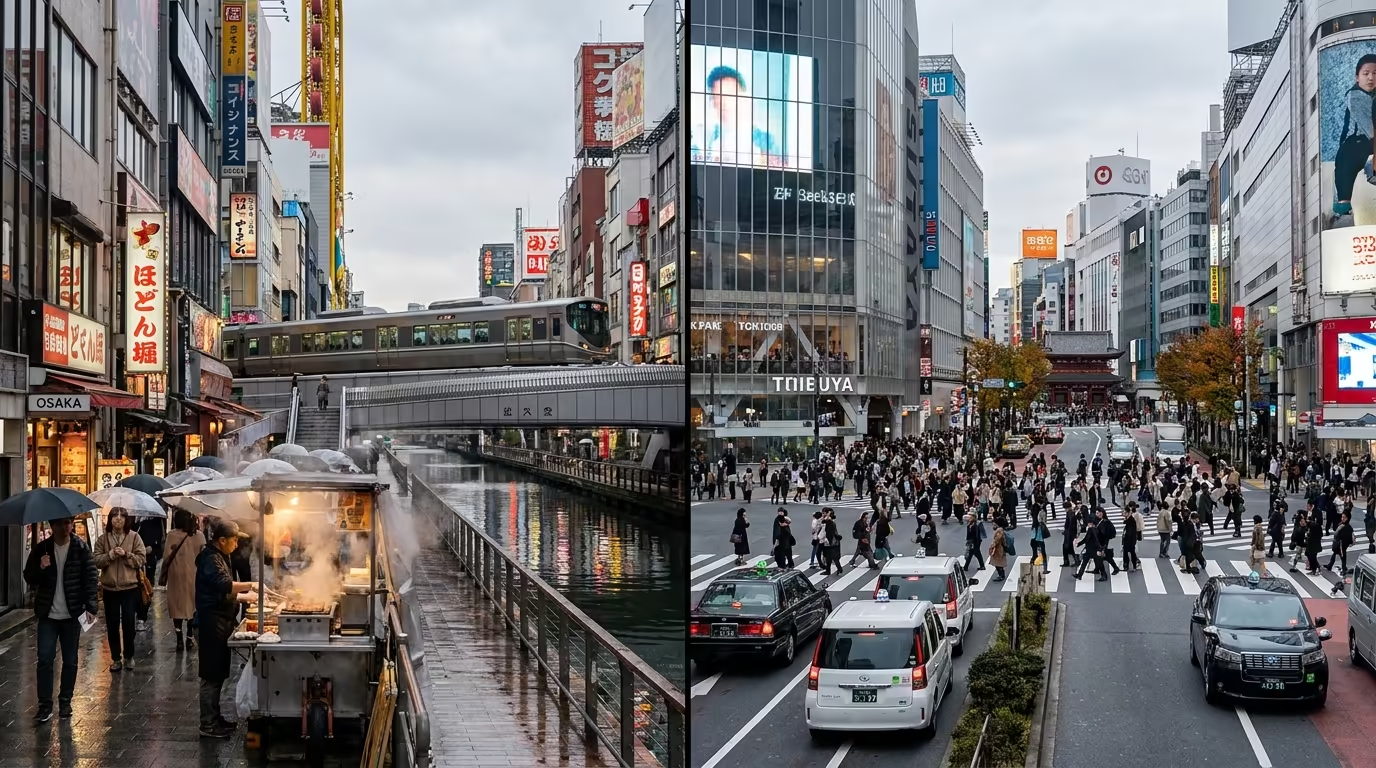
Osaka vs Tokyo for First-Time Visitors: Which City Actually Wins?
The Osaka vs Tokyo for first-time visitors debate is the single most common question on Japan travel forums, and it deserves a straight answer rather than a diplomatic non-answer. Both cities are safe, efficient, and genuinely rewarding. But they are not interchangeable. Tokyo hits harder on arrival — more scale, more spectacle, more everything. Osaka hits differently: warmer, cheaper, and built around eating rather than impressing. Your choice should come down to trip length, budget, and what kind of traveler you are.
If you have fewer than five nights in Japan, the evidence tips toward Tokyo as your single base. If you have seven or more nights — and most first-timers should aim for that — visit both. A deep dive into Osaka’s top experiences and our separate guide to the best things to do in Tokyo cover the sights in detail. This article is about the harder question: where to base yourself, what it costs, and which city fits your travel personality.
Daily Costs: Osaka vs Tokyo in Real Numbers
The price gap between these two cities is real and consistent across every cost category. Tokyo runs roughly $179–$222+ per person per day at a mid-range budget (hotel, meals, transit, entry fees). Osaka comes in at $104–$185 per person per day for equivalent quality — a saving of 15–40% depending on your choices.
Hotel Prices by Star Rating (2026 averages)
- 3-star hotel: Tokyo ~US$150/night | Osaka ~US$100/night
- 4-star hotel: Tokyo ~US$200–250/night | Osaka ~US$120–170/night
- 5-star hotel: Tokyo ~US$300+/night | Osaka ~US$280+/night
The luxury gap narrows at the top end, but at the mid-range — which is where most first-timers land — Osaka saves you serious money. That saving compounds quickly across a seven-night trip: $350–$700 back in your pocket just on accommodation.
Food and Transport Costs
Osaka earns its reputation as Japan’s street food capital. Casual meals in Dotonbori or Shinsekai routinely cost ¥600–¥1,200 (roughly US$4–8), and you can eat extremely well for under US$20 a day if you stick to local spots. Tokyo’s food is world-class but the average outlay is higher, and it’s easier to accidentally wander into a ¥4,000 lunch. The broader Japan travel guide on this site covers food budgeting across the country.
Getting between the two cities is easy. The Shinkansen Nozomi service covers Tokyo to Shin-Osaka in approximately 2 hours 30 minutes for around US$95 one-way. That makes a dual-city itinerary entirely realistic on a week-long trip.
Where to Stay: Neighborhood Logic for Each City
Best Areas to Stay in Tokyo
Tokyo’s scale is the main thing to manage. The city’s subway network is excellent — among the best in the world — but the distances involved can make sightseeing exhausting if you’re poorly positioned. For first-timers, Shinjuku offers the best balance: central, served by multiple train lines, close to nightlife, and with accommodation at every price point. Shibuya suits those chasing the neon-and-crossings experience. Asakusa is the pick for travelers who want older, temple-district Tokyo and slightly quieter streets.
Stay in Tokyo if you want the widest variety of food, entertainment, and neighborhood character in a single city. The trade-off is cost and the cognitive load of navigating a metro area of 14 million people. Our detailed Tokyo Japan travel guide breaks down each district’s character further.
Best Areas to Stay in Osaka
Namba is the default choice for first-timers: walkable to Dotonbori’s food streets, close to the subway hub, and packed with accommodation options at reasonable prices. Umeda (Osaka Station area) is slightly calmer and better for the Shinkansen connection north. Shinsekai is the gritty, local alternative — great food, lower prices, but less polished.
Osaka’s big structural advantage is size. Most major sights sit within 20–30 minutes by subway from any central neighborhood. That efficiency means less time in transit and more time eating takoyaki at 11pm, which is very much the Osaka way. Check the Osaka things-to-do guide to map your first few days.
What to See: Tokyo vs Osaka Top Experiences
Tokyo Highlights for First-Timers
Tokyo delivers the “cinematic Japan” experience that most first-time visitors have in their heads: Shibuya Scramble, Asakusa’s Senso-ji Temple, the neon canyons of Shinjuku at night, Akihabara for anime and electronics, Harajuku for street fashion. The Tokyo Tourism official site maintains up-to-date event calendars and free attraction listings that are worth bookmarking before you go.
Tokyo also leads on culinary range. The city holds more Michelin stars than any other city on earth, but it’s equally strong at the ¥800 ramen shop level. You can eat kaiseki, conveyor-belt sushi, and yakitori street skewers all within the same neighborhood on the same day.
Osaka Highlights for First-Timers
Osaka’s list of sights is shorter but the experience of the city is what people remember. Dotonbori canal at night, with its giant mechanical crab and neon reflections on the water, is one of Japan’s most photogenic urban scenes. Osaka Castle is genuinely impressive and surrounded by parkland that’s particularly good in spring (cherry blossoms) and autumn (maples). Universal Studios Japan is a serious draw for families and Harry Potter fans — plan at least a full day and book entry in advance.
The real differentiator, though, is Osaka’s role as a Kansai base. Kyoto is reachable by regular train in as little as 15 minutes on some routes, for around US$4 one-way. Nara, with its famous free-roaming deer, is about 45 minutes. Kobe and the castle town of Himeji are both under an hour. If your Japan itinerary includes Kyoto — and most first-timers’ should — staying in Osaka and day-tripping is often more cost-effective than paying Kyoto’s premium hotel rates. The Japan National Tourism Organization has excellent Kansai day-trip planning tools.
Osaka vs Tokyo: Which City Suits Which Traveler?
Choose Tokyo If…
- You have 4–5 nights and want the broadest single-city snapshot of Japan
- Pop culture, tech, fashion, and big-city energy are your priorities
- You want maximum variety and don’t mind paying for it
- Fine dining and Michelin-starred experiences are on the agenda
Choose Osaka If…
- Budget matters — you’ll save 15–30% across the board
- Food is the trip: street snacks, casual izakayas, late-night eating culture
- You want a compact, friendlier city that’s easier to navigate
- Kyoto, Nara, and Kobe are on your list — Osaka is the ideal launch pad
- You prefer a relaxed, local atmosphere over high-octane metropolitan energy
The Honest Verdict: Osaka vs Tokyo for First-Time Visitors
For a pure first trip with limited time: Tokyo. It’s the city that justifies the long-haul flight on its own and delivers the widest range of experiences in one place. For a first trip with a week or more: both cities, in sequence. A practical split is 4–5 days in Tokyo followed by 3–4 days in Osaka (with a day trip to Kyoto built in), connected by Shinkansen.
If budget is genuinely tight and you can only afford one city, Osaka wins on value, warmth, and its unbeatable position as a Kansai hub. Just don’t come expecting Tokyo’s scale — Osaka is deliberately, cheerfully smaller than that.
Planning a longer Japan journey that also takes in smaller, quieter destinations? Our guide to things to do in Lucerne is a useful comparison for travellers who enjoy a compact, walkable European city — Osaka’s navigability draws similar praise from the same type of traveler. And if you’re building a broader international trip around Japan, the Milan travel guide covers another city where food culture and urban energy collide in ways that resonate with Osaka fans.
Frequently Asked Questions
Is Osaka or Tokyo better for a first trip to Japan?
Tokyo is the stronger single-city choice for a short first trip — it delivers the widest variety of experiences in one place. But if you have 7+ nights, visiting both is the consensus recommendation. Tokyo for 4–5 days, then Osaka for 3–4 days with Kyoto day trips, is a proven itinerary.
How much cheaper is Osaka than Tokyo?
Osaka is typically 15–30% cheaper than Tokyo across hotels, meals, and attractions. A mid-range 3-star hotel runs about US$100/night in Osaka vs US$150 in Tokyo. Daily per-person costs average $104–$185 in Osaka compared to $179–$222+ in Tokyo.
How do you get from Tokyo to Osaka?
The Shinkansen Nozomi bullet train covers the journey in approximately 2 hours 30 minutes. A one-way adult fare costs around US$95. Japan Rail Pass holders should note the Nozomi is not covered — they’ll need to take the slightly slower Hikari service, which adds about 30 minutes.
Is Osaka a good base for visiting Kyoto?
Yes — Osaka is one of the best bases for Kyoto. Some train routes connect central Osaka and Kyoto in as little as 15 minutes for around US$4 one-way. Nara is 45 minutes away, Kobe under 30 minutes, and Himeji under an hour, making Osaka ideal for Kansai day trips.
Which city is easier to navigate for first-time visitors?
Osaka is significantly easier. Most major sights are within 20–30 minutes by subway from any central neighborhood, and the city is compact enough to walk large sections. Tokyo’s transit is world-class but the scale can feel overwhelming — multiple overlapping train networks and very long distances between attractions.
What is the best time of year to visit Tokyo and Osaka?
Spring (late March to April) for cherry blossoms and autumn (October to November) for foliage are peak seasons in both cities — spectacular but busy and expensive. July 2026 is summer: hot and humid (30–35°C), with fewer crowds than spring and lower hotel rates. Expect typhoon risk from August onward.
