
Key Takeaways
- Pack layers and plan indoor backups for cooler November weather.
- Choose short sections of the Freedom Trail for comfortable walking.
- Use the MBTA and group nearby sights to save time and avoid weather delays.
- Book Thanksgiving‑week accommodations and timed‑entry attractions early.
things to do in boston in november range from walking historic streets to warming up in a neighborhood café. Boston, in the United States, has crisp autumn days, early sunsets, and plenty of indoor attractions for chilly or rainy weather.
November is a quieter time to explore than peak summer, though Thanksgiving week and popular events can bring busy hotels and restaurants. Pack layers, check opening hours before setting out, and leave room in your plans for weather changes.
This guide covers seasonal highlights, local neighborhoods, food, transport, and practical advice for a comfortable visit. If you are saving ideas for a different city break, take a look at our guide to 20 fun and best things to do in Salerno, Italy.
Quick Guide to Things to Do in Boston in November
| Trip detail | What to know |
|---|---|
| Typical weather | Cool to cold, with changeable conditions and a chance of rain or early snow |
| What to pack | Warm layers, a waterproof outer layer, comfortable shoes, and a hat |
| Getting around | Walk in central neighborhoods, and use the MBTA subway and buses for longer trips |
| Good indoor options | Museums, historic sites, cafés, the New England Aquarium, and the Boston Public Library |
| Book ahead | Thanksgiving-week accommodation, popular restaurants, and timed-entry attractions |
| Best planning tip | Group nearby sights together and keep a flexible indoor backup plan |
20 Things to Do in Boston in November
Tip 1 – Walk part of the Freedom Trail

The Freedom Trail links historic sites across central Boston, including Boston Common, the Old State House, and Faneuil Hall. You can follow its marked route independently or join a guided tour for extra context.
November walking can be refreshing, but wind and rain make long stretches less comfortable. Choose a short section, wear shoes with good grip, and check which historic buildings are open before you go. The National Park Service guide to Boston’s historic sites is a useful starting point.
Tip 2 – See autumn color on Boston Common and the Public Garden
Boston Common and the adjoining Public Garden offer an easy green-space break close to downtown. In early November, you may still catch fall color, but leaves and displays vary from year to year and can fade quickly after cold weather.
Bring a warm layer and take a short stroll rather than planning a full afternoon outdoors. The Public Garden’s swan boats are seasonal and are generally not running in November, so enjoy the paths and lagoon instead.
Tip 3 – Explore the North End and its historic streets

Boston’s North End is known for Italian-American restaurants, bakeries, and narrow streets. Combine a neighborhood walk with a stop at a café or pastry shop, and look out for historic landmarks such as the Paul Revere House.
Restaurant seating can be limited, especially on weekend evenings. Make a reservation for a popular dinner spot, or visit at lunch for a more relaxed meal. The neighborhood is compact, but uneven sidewalks and busy crossings call for comfortable shoes and attention.
Tip 4 – Warm up at the Museum of Fine Arts
The Museum of Fine Arts, Boston, is a strong choice for a cold or rainy day. Its broad collection includes works from around the world, so you can spend a few hours or make a longer visit depending on your interests.
Check current admission details, exhibitions, and opening times on the Museum of Fine Arts website before you go. A museum visit can take longer than expected, so avoid squeezing it between several distant attractions.
Tip 5 – Visit the Isabella Stewart Gardner Museum
This museum combines art with an atmospheric courtyard and a distinctive collection displayed in a historic home. It offers a quieter change of pace from Boston’s busiest landmarks and works especially well on a chilly afternoon.
Review ticket rules and current visitor information in advance. The museum is in the Fenway area, so you can pair it with nearby museums, but give each stop enough time rather than trying to see everything in one day.
Tip 6 – Take in the views from the Harborwalk
Boston’s Harborwalk gives you a way to see the waterfront, harbor views, and parts of the Seaport and downtown shoreline. November can bring brisk wind off the water, so check the forecast and make this a short outing on colder days.
Choose a section that fits your schedule, then warm up indoors at a nearby café or restaurant. Waterfront paths are pleasant in clear weather, but they are not a substitute for a sheltered activity if rain or icy conditions arrive.
Tip 7 – Spend time at Faneuil Hall Marketplace

Faneuil Hall Marketplace is a convenient stop for food, shops, and a look at one of Boston’s best-known central areas. Quincy Market’s food counters can be helpful when everyone in a group wants something different.
It can feel crowded around meal times and on holiday weekends. If you prefer a quieter visit, go outside the lunch rush and check the marketplace’s current hours before traveling there.
Tip 8 – Visit the New England Aquarium
The New England Aquarium is a practical choice for families and anyone looking for a warm indoor activity near the waterfront. Its exhibits focus on marine life, and the aquarium is easy to combine with a walk around the harbor when the weather allows.
Buy tickets or check timed-entry information before your visit, particularly during school holidays and Thanksgiving week. Families should allow time for breaks, and visitors who want a more peaceful experience may prefer a weekday if their schedule permits.
Tip 9 – Browse Boston Public Market
Boston Public Market is an indoor market with food and products from New England vendors. It is a handy place to try regional ingredients, pick up a snack, or find a simple lunch when the weather is poor.
Vendor offerings and hours can vary, so check the market’s current information before making a special trip. It is close to central attractions, which makes it easy to add to a downtown walking day.
Tip 10 – Explore Beacon Hill at a comfortable pace

Beacon Hill is known for brick sidewalks, historic homes, and gas lamps. Acorn Street is a popular photo stop, but the neighborhood is lived in, so keep voices low, stay on public paths, and avoid blocking doorways.
The streets are attractive in autumn, though some sidewalks are uneven and can be slippery after rain. Visit during daylight, wear shoes suited to cobblestones, and combine the walk with Boston Common or the Massachusetts State House area.
Tip 11 – See the Boston Public Library at Copley Square
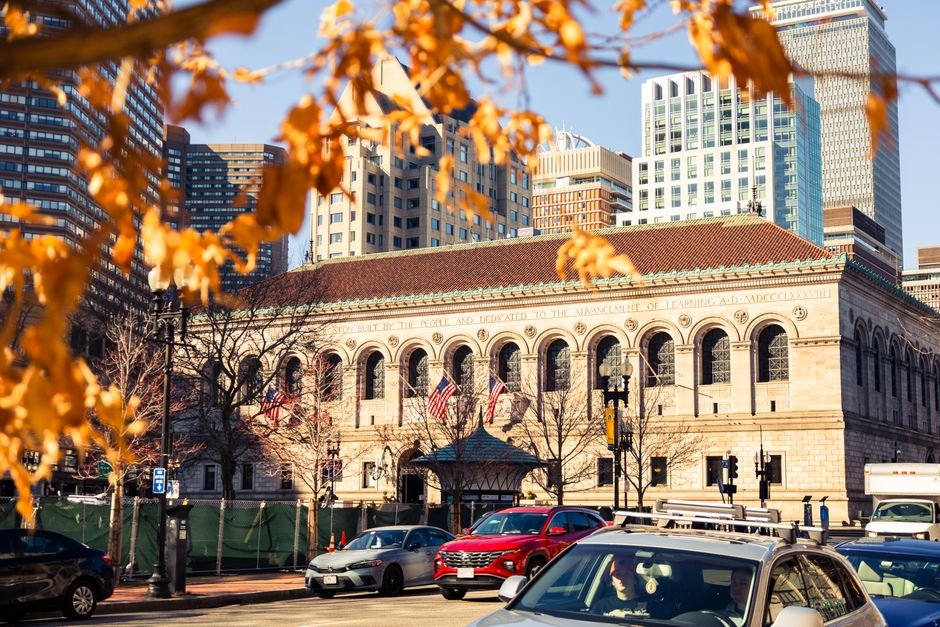
The Boston Public Library’s central branch is an architectural highlight and a welcome indoor stop. Copley Square is also a useful base for exploring Back Bay, with cafés and shops nearby for a break after sightseeing.
Library access and visitor rules can change around events or holidays. Check current visitor information, and remember that it is a working public library, so keep noise low and respect areas reserved for readers.
Tip 12 – Try New England comfort food
Cool November weather is a good excuse to try clam chowder, baked beans, or a warm lobster roll if it is on the menu. Boston has everything from casual seafood counters to sit-down restaurants, so you can choose according to budget and time.
Menus, prices, and seasonal ingredients vary. Ask about portion sizes and check whether tax and service charges are included before ordering. For a lower-cost meal, compare lunch specials, market food counters, and neighborhood cafés.
Tip 13 – Cross the Charles River to Cambridge

Cambridge is a separate city just across the Charles River, but it is an easy addition to a Boston trip. Explore Harvard Square or Kendall Square, browse a bookshop, and stop for coffee or a casual meal.
Use the subway or a river crossing route that suits your starting point rather than assuming every destination is within a short walk. Check local university calendars if you want to avoid unusually busy periods around campus events.
Tip 14 – Catch a game or live performance
Boston’s sports and arts calendars continue through the colder months. Depending on the date, you may find a professional game, a college match, theatre, comedy, or live music.
Schedules change each year, and popular events can sell out. Check official venue calendars before building your evening around a performance, and confirm the route home if the event ends late.
Tip 15 – Visit the Museum of Science
The Museum of Science offers interactive exhibits that suit families and curious adults. It is a useful indoor option when the weather makes a long outdoor itinerary less appealing.
Check exhibit availability, ticket information, and opening hours before visiting. If you are traveling with children, plan a few priority exhibits rather than expecting to cover the whole museum in one visit.
Tip 16 – Walk or cycle the Esplanade if the weather is mild
The Charles River Esplanade has paths and river views close to central Boston. On a calm, dry day, it is a pleasant place for a short walk or a ride, and it can feel less hectic than the main shopping streets.
November temperatures can change quickly, and daylight ends early. Dress warmly, use lights if cycling near dusk, and avoid the route if paths are icy or conditions feel unsafe.
Tip 17 – Plan for Thanksgiving week and seasonal events
Thanksgiving falls on the fourth Thursday in November, and opening hours may change around the holiday. Some restaurants and attractions close or operate on reduced schedules, while popular hotels and transport services can be busier.
Confirm holiday hours directly with each venue, and book accommodation and any special meal plans early. Seasonal markets, performances, and light displays vary each year, so check local listings rather than relying on last year’s schedule.
Tip 18 – Use the MBTA and group sights by area
Boston is walkable in its central neighborhoods, but the subway and buses are useful for longer trips. Check service notices and fares on the MBTA’s official website, or use a current transit app to compare routes and travel times.
Group nearby sights together to avoid spending too much of a short day in transit. Boston’s streets can be confusing to first-time visitors, and walking distances that look short on a map may include hills, busy crossings, or slower sidewalks.
Tip 19 – Pack for changing weather and early sunsets
November conditions can shift from bright and mild to cold, wet, or windy. Bring layers, a waterproof jacket, a warm hat, and shoes that can handle wet pavement. A compact umbrella can help, but wind may make a hooded jacket more practical.
Check the forecast each morning and plan outdoor stops for daylight hours. If you are visiting from a warmer climate, remember that a sunny forecast can still feel cold near the harbor or river.
Tip 20 – Stay aware and avoid the most common planning mistake
Boston is a major city, so use normal urban awareness: keep an eye on your belongings in crowded places, use well-lit routes at night, and follow local instructions around roadworks and events. For emergencies in the United States, call 911.
A common tourist mistake is trying to cover Boston and nearby cities in one packed day without allowing for walking time, transit, and weather. Choose a few priorities, check opening times, and keep one indoor alternative ready.
Practical Boston Travel Tips for November
Local customs, useful phrases, and tipping
English is the main language in Boston, and a simple “hello,” “please,” and “thank you” is appreciated. You may hear the local accent, but visitors do not need to imitate it. In shops and restaurants, ask staff for help if a menu or transit instruction is unclear.
Tipping is customary in many US restaurants and for some personal services. The expected amount depends on the service and setting, and policies can differ, so check the bill for an included service charge before adding more. Sales tax is often added to listed prices at checkout.
Useful apps and emergency information
A maps app can help with walking directions, while the MBTA website or a transit app can help with route changes and service updates. Save your hotel address and key reservations offline in case your mobile connection is unreliable.
For emergencies, call 911 in the United States. For non-emergency questions, use the relevant local authority or venue contact information. Keep your phone charged, especially on long days when you are navigating between neighborhoods.
Advance bookings and budget planning
Compare hotel prices before booking, since rates can rise around Thanksgiving and major events. Reserve popular restaurants and timed-entry attractions in advance when possible, but leave some flexibility for weather and changing plans.
To manage costs, use public transport, look for free public spaces such as Boston Common, and compare museum admission options carefully. A multi-attraction pass is only worthwhile if you plan to visit enough included attractions to make its price useful.
Visa & Entry Requirements
Boston is in the United States, and entry requirements are set at the national level. The rules that apply to your trip depend on your passport, travel purpose, itinerary, and current US government policy. A visa, an electronic travel authorization, or another permission may be required, but no single rule applies to every traveler.
Before booking, review the US Department of State visa information and, where relevant, the official Electronic System for Travel Authorization website. Travelers should also consult the nearest US embassy or consulate for guidance based on their circumstances. Requirements can change, so confirm them again close to departure.
Check your passport’s expiration date and condition, and confirm whether your route or personal circumstances require a particular amount of remaining validity or blank pages. If you need a visa or authorization, apply through the official process and allow enough time for any review. Do not assume that a transit stop or a previous US visit removes the need to meet current requirements.
Border officials may ask about your travel plans, accommodation, or onward journey. Keep your hotel details, return or onward travel information, and other relevant documents accessible. Travel insurance is a sensible way to prepare for unexpected medical or travel costs, though it does not replace entry documents.
Vaccination, health, customs, and length-of-stay rules can depend on your passport, recent travel, and current policy. Check official US guidance for any health documentation, goods that must be declared, or items that are restricted. Follow instructions from border officers and declare items when required. This is general travel information, not legal advice or a guarantee of entry.
Frequently Asked Questions
Is November a good time to visit Boston?
Yes, if you are prepared for cool, changeable weather and shorter days. November can be a good month for museums, historic sites, cafés, and quieter city walks, but outdoor plans need a weather backup.
What are the best things to do in Boston in November on a rainy day?
Consider the Museum of Fine Arts, the Isabella Stewart Gardner Museum, the Museum of Science, the New England Aquarium, or Boston Public Market. Check opening hours and tickets before traveling, especially around Thanksgiving.
Does it snow in Boston in November?
Snow is possible, but conditions vary from year to year. Pack for cold rain and wind as well as the chance of early snow, and check the forecast shortly before your trip.
Can I walk around Boston in November?
Yes. Many central sights are close enough to connect on foot, including Boston Common, Beacon Hill, and parts of the Freedom Trail. Wear warm, comfortable shoes and be cautious on wet or uneven sidewalks.
Is Boston busy during Thanksgiving?
It can be busier around the holiday, and some businesses may close or change their hours. Reserve accommodation and popular meals in advance, and confirm attraction schedules directly with each venue.
What should I pack for Boston in November?
Bring warm layers, a waterproof jacket, comfortable shoes with good grip, and a hat. A scarf and gloves are useful on windy days, especially near the waterfront and Charles River.
What is the best way to get around Boston?
Walk around central neighborhoods and use the MBTA subway or buses for longer distances. Check service updates before traveling and allow extra time if you are unfamiliar with the city.
Conclusion: Things to Do in Boston in November
There are plenty of things to do in Boston in November, from following the Freedom Trail and exploring Beacon Hill to warming up in a museum or neighborhood café. The season rewards visitors who balance outdoor walks with indoor stops.
Plan around the forecast, check holiday opening hours, and give yourself enough time to get between neighborhoods. With warm layers and a flexible schedule, you can enjoy Boston’s history, food, and local character even when the days are cool and short.
