Let’s be straight about the math first. A typical mid-range family of four in Tokyo spends roughly ¥42,500 to ¥68,500 per day, which puts a 7-night trip somewhere between $1,980 and $3,200 total. Hitting Tokyo with kids on $150 per day as a family means you are targeting the lower end of ¥20,000 to ¥30,000 daily, and you will need to make deliberate choices to get there. It is achievable. It is not automatic.
The good news: Tokyo rewards budget-conscious families more than almost any other major world city. Free shrines, spotless public parks, safe streets, and a convenience store on every block serving hot meals for ¥500 a head make frugality surprisingly comfortable here. The city also makes more sense to explore neighborhood by neighborhood, which naturally reduces transit costs when you cluster each day’s sights.
Key takeaways
- A family of four can realistically target ¥20,000 to ¥30,000 per day (about $130 to $200) by staying outside central Tokyo, eating mostly from convenience stores, and prioritizing free shrines and parks.
- Accommodation is the single biggest budget threat: a central family room costs ¥30,000 to ¥45,000 per night alone, so choosing a suburban or business-hotel area like Hatchobori is non-negotiable at this price point.
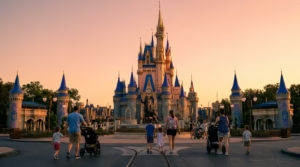
- Skip Tokyo Disneyland entirely; one day there easily costs a family of four $400 to $600 once tickets, food, and transport are included.
- Suica IC cards make metro travel fast and cheap for kids of all ages, and clustering sights by neighborhood keeps daily transit costs around ¥2,500 to ¥4,500 for the whole family.
- Late May, early June, or late September offer the best balance of mild weather, lower hotel rates, and thinner crowds compared to cherry blossom season or summer school holidays.
What “$150 Per Day” Actually Buys in Tokyo
The $150 figure covers the entire family, not per person. Per person, you are working with roughly $37.50 a day. Here is what that forces in each spending category.
Accommodation is the hardest line item. A decent family room in central Shinjuku or Shibuya runs ¥30,000 to ¥45,000 per night. That single cost already blows the daily budget. To make the numbers work, you need to look at business hotels with connecting rooms, simple serviced apartments, or neighborhoods 10 to 20 minutes from the center by train. Areas like Hatchobori, Monzen-Nakacho, or Koenji offer decent family options in the ¥12,000 to ¥18,000 per night range without feeling remote.
Food is where Tokyo actually helps you. A convenience store bento runs ¥450 to ¥600, onigiri are ¥120 to ¥180 each, and a hot bowl of ramen at a local shop costs around ¥800 to ¥1,000 per person. Keeping two meals a day at convenience-store or food-court level and one simple sit-down meal can hold the family’s daily food spend to ¥5,000 to ¥7,000. Avoid the tourist-facing restaurants around Asakusa’s Nakamise-dori for anything beyond a snack.
Transport on the Tokyo metro is genuinely affordable. Budget ¥2,500 to ¥4,500 per day for the whole family if you cluster sights sensibly. Load Suica cards for everyone, including kids, and tap in and out without hunting for ticket machines.
Attractions are where your daily discipline matters most. Budget roughly ¥4,000 per day for paid sights, which means one paid museum or one viewpoint per day, with the remaining time spent at free temples, parks, and street-level neighborhoods. That is more than enough to fill seven rich days.
Tokyo with Kids on $150 Per Day: Day-by-Day Itinerary
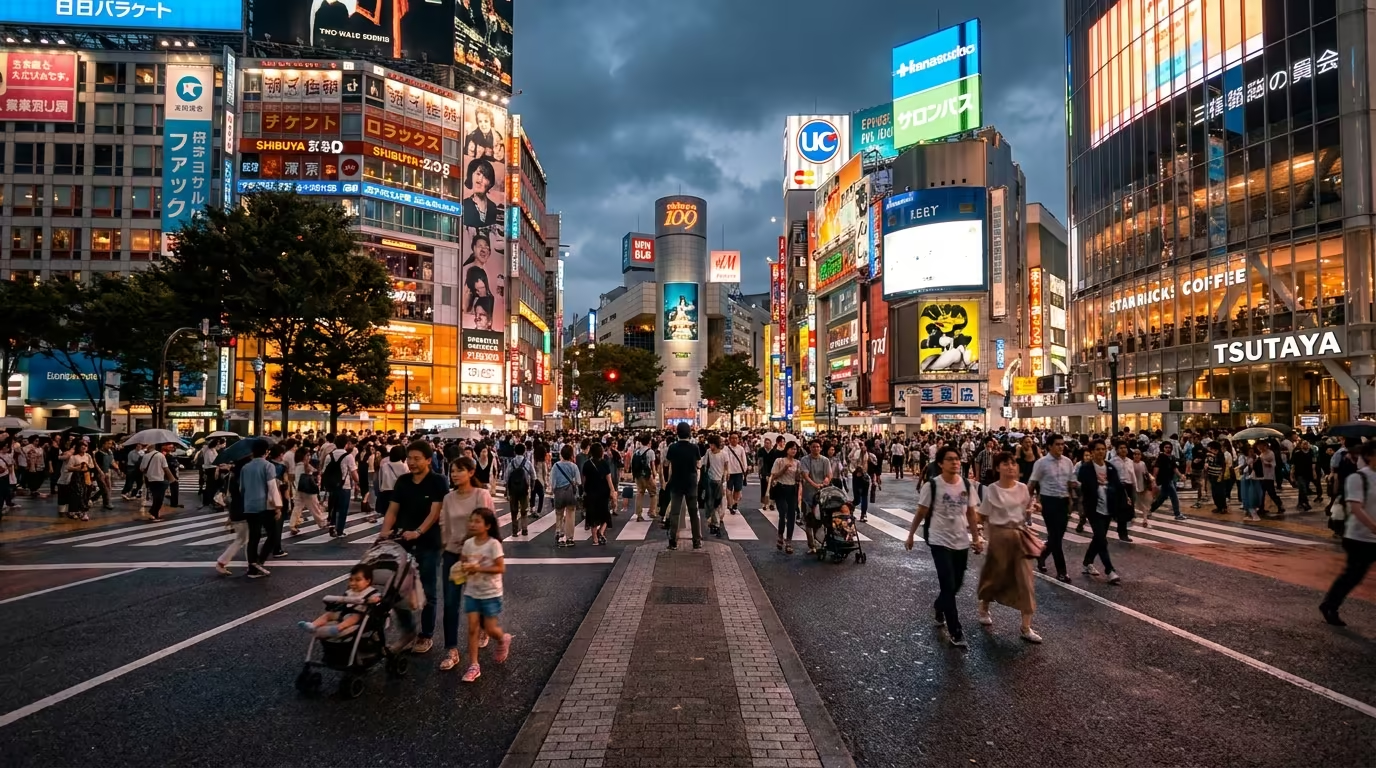
Day 1: Arrival and Shibuya Crossing
Keep Day 1 gentle. Check in, get your Suica cards loaded at the airport, and head to Shibuya Crossing in the early evening. The scramble crossing and the Hachiko statue cost nothing and deliver an immediate sense of being in Tokyo. Grab dinner from the Shibuya food court inside Hikarie or a nearby convenience store. Total paid spend: close to zero.
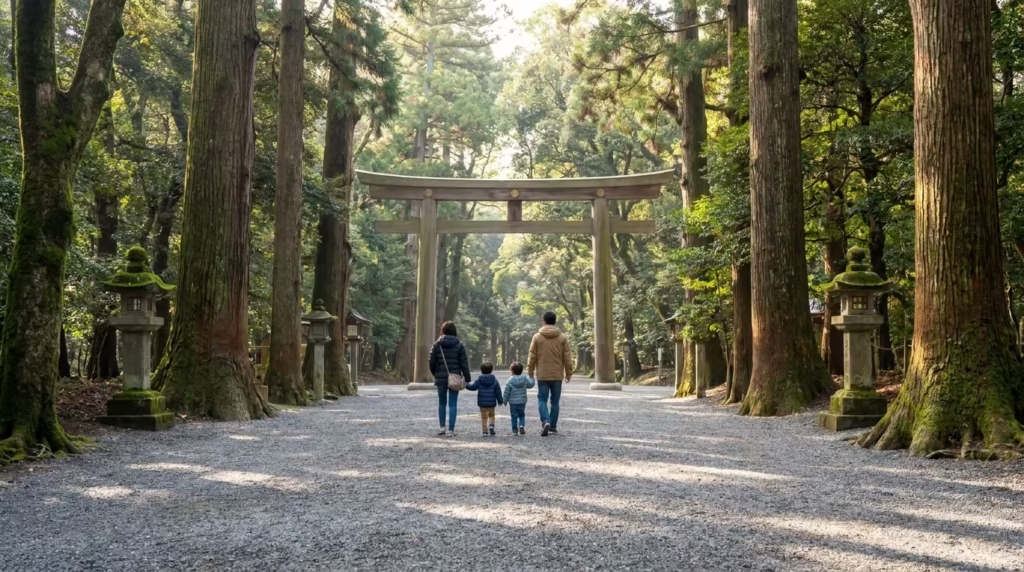
Day 2: Meiji Shrine, Harajuku, and Shinjuku
Start the morning at Meiji Shrine, which is free and sits inside a shaded forest that feels miles from the city around it. Walk south to Takeshita Street in Harajuku for rainbow crepes (around ¥700 each) and window-shopping. Afternoons work well in Shinjuku: the Godzilla head on the Toho Cinema building is visible from street level, and the department-store basement food halls are excellent for a cheap, high-quality dinner pickup. Kids rarely get bored in Shinjuku.
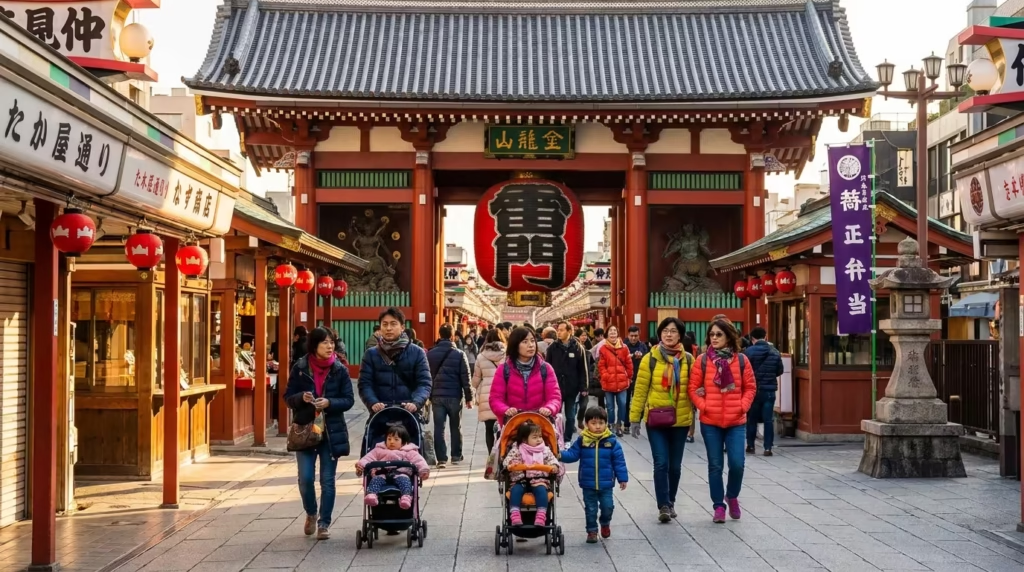
Day 3: Asakusa, Senso-ji, and One Viewpoint
Senso-ji Temple in Asakusa is Tokyo’s most visited temple and costs nothing to enter. The Nakamise-dori shopping street leading up to it is good for cheap snacks (ningyo-yaki cakes are ¥100 to ¥150 each) and small souvenir shopping. Choose one paid viewpoint for the whole trip and use it today. Tokyo Tower (Main Deck adult ¥1,200, child ¥700) is slightly less expensive and less crowded than the Skytree, and the observation deck gives a clear view of the city grid. For a family of four, Tokyo Tower costs around ¥3,800 versus the Skytree’s roughly ¥5,600 for the lower deck. That gap matters on a tight budget.
Day 4: Neighborhood Wander (Yanaka, Shimokitazawa, or Akihabara)
This is your nearly-free day and often the one families remember most. Yanaka Ginza is an old Tokyo shopping street with low-key craft shops, cheap street food, and a cemetery park that kids find oddly fascinating. If your children lean toward games and anime, a couple of hours in Akihabara costs nothing to walk and a set amount in the arcades (set a ¥1,000 limit per child). Shimokitazawa works well for older kids who enjoy browsing second-hand vinyl and vintage clothes. Budget a full day but expect to spend ¥2,000 to ¥3,000 total on snacks and small finds.
If you are planning to compare Tokyo to other Japanese destinations, our Osaka vs Tokyo guide for first-time visitors breaks down which city suits different family travel styles. And if Japan inspires you to think about other big-city family adventures, the best things to do in Japan overall gives a useful wider picture.
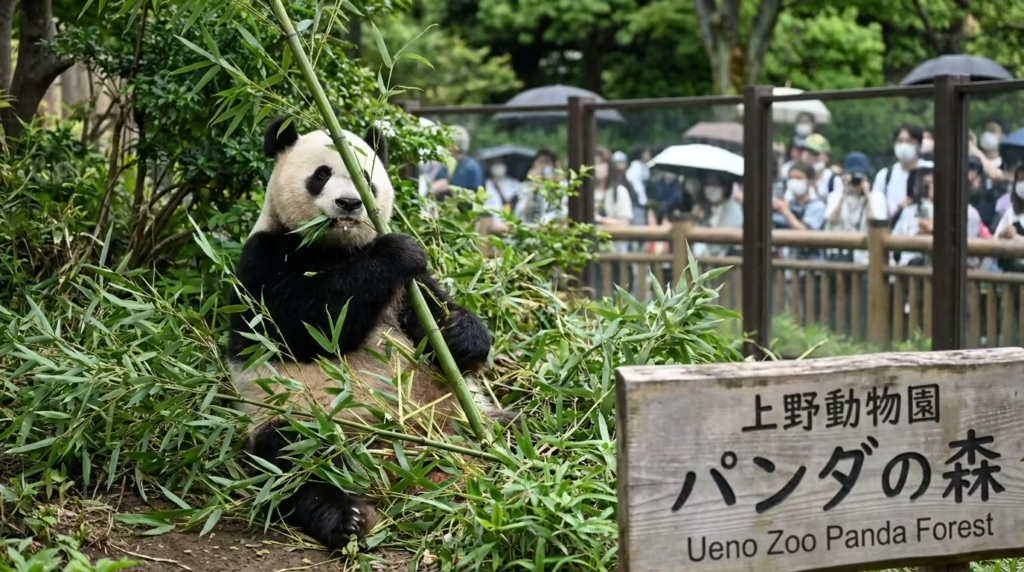
Day 5: Ueno Park, Museums, and Zoo
Ueno Park is free to enter and contains a remarkable concentration of affordable sights. The National Museum of Nature and Science charges ¥630 for adults and ¥free for children under 18, making it one of the best-value half-days in the city. The Ueno Zoo, home to giant pandas, charges ¥600 for adults and ¥200 for children aged 13 to 15 (under 12 free), so a family of four with two young kids pays around ¥1,200. Pair the zoo with a picnic lunch from a nearby convenience store and you have a full day under ¥5,000 in total attractions spend.
Day 6: Odaiba Science and Waterfront
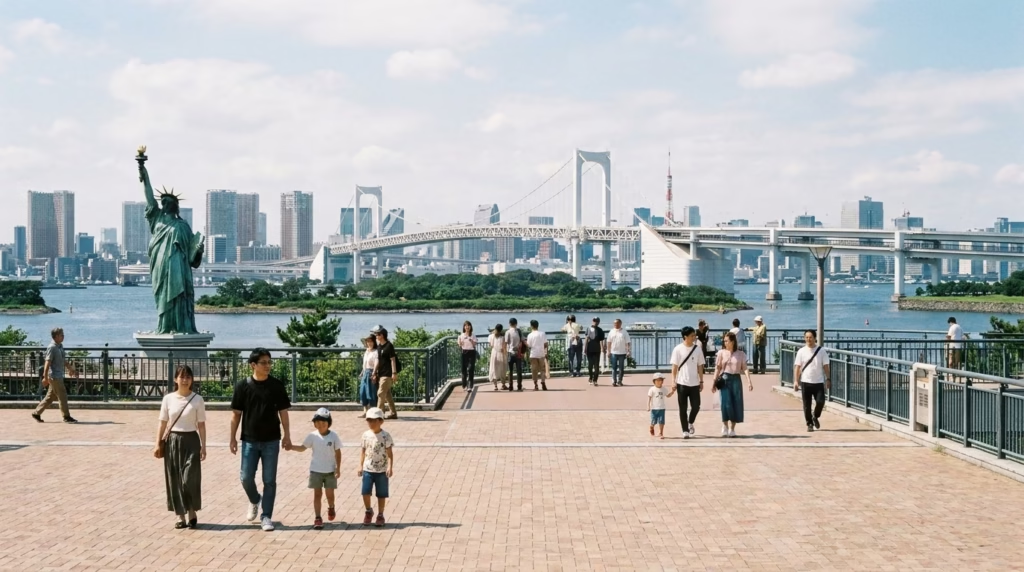
Odaiba sits on a man-made island in Tokyo Bay and clusters some of the city’s best kid-focused paid experiences. The Miraikan (National Museum of Emerging Science and Innovation) charges ¥630 for adults and ¥210 for children aged 6 to 18. The museum’s humanoid robot demonstrations and hands-on science exhibits genuinely hold primary-school-age kids for three hours. Miraikan’s official site has current opening hours and reservation details.
teamLab Planets (around ¥3,200 per adult, ¥2,000 per child) is the premium option here. It is visually spectacular and works brilliantly with kids aged 5 and up, but it pushes the day’s attraction budget to around ¥10,400 for a family of four. That is a legitimate splurge day within the overall $150 target if you keep food costs low. The Gundam statue at DiverCity Tokyo Plaza is free to see from the plaza.
Day 7: Slow Morning and Departure Prep
Use the final morning for a neighborhood you liked best during the week. Revisit a market, pick up remaining omiyage (souvenir snacks) from a convenience store or depachika food hall, and allow buffer time for the airport journey. Narita Express takes roughly 60 minutes from Shinjuku (around ¥3,070 per adult).
Where Most Families Go Over Budget (and How to Avoid It)
The three most common budget-killers on a Tokyo family trip are accommodation booked too centrally, a day at Tokyo Disneyland (one-day tickets for a family of four now run ¥55,000 to ¥70,000 depending on the date tier, not including food), and intercity bullet trains to Kyoto or Osaka. This itinerary eliminates all three by design.
If your kids are theme-park obsessed and you are weighing whether a park day is worth the cost, our comparison of Disney World vs Universal Orlando for kids under 10 gives a useful framework for thinking through theme-park value generally. The same logic applies in Tokyo: the cost-per-hour of entertainment at a major park rarely beats a full day of free temples and paid museums.
Food discipline matters more than any other single variable. Families who eat two convenience-store meals per day and one simple restaurant meal consistently report staying inside the ¥5,000 to ¥7,000 food budget. Families who slip into sit-down lunches near tourist sights spend ¥12,000 to ¥15,000 on food alone without noticing.
Is Tokyo with Kids on $150 Per Day Worth It?
Yes, for the right family. You need to be comfortable navigating a metro system with children, willing to eat convenience-store food regularly, and genuinely interested in the texture of a real city rather than resort-style comfort. Tokyo is extraordinarily safe, the public transit is reliable enough to let kids tap their own Suica cards independently by Day 2, and the range of free and low-cost things to do in Tokyo is larger than almost any comparable city.
Families who need central hotels, air-conditioned restaurant lunches every day, and at least one theme-park visit should budget $250 to $350 per day instead. There is no shame in that, but this guide is not for them.
If you want to extend beyond Tokyo, Osaka’s best experiences are well-suited to the same budget-first approach, and the city’s street food scene is even cheaper than Tokyo’s. Just remember that a bullet-train ticket between the two cities costs around ¥13,870 per adult each way, which adds roughly $200 to the family’s total before you factor in Osaka accommodation. For a pure 7-day Tokyo stay, skipping that journey is the smarter financial call.
The timing sweet spot for this budget is late May or late September. Cherry blossom season (late March to mid-April) and summer school holidays (mid-July to August) push hotel rates up 20 to 40 percent in many areas, which alone can make the $150 target unreachable without staying very far from the city center. Japan National Tourism Organization publishes monthly crowd and event calendars that are worth checking before you book.
Verdict: Who This Itinerary Is Right For
This plan suits families with children roughly aged 5 to 14 who are curious about culture, can handle metro travel without melting down, and have parents willing to do some pre-planning around accommodation location and food. It does not suit families with toddlers who need stroller-friendly everything (Tokyo metro stairs are frequent), families who require English-language menus at every meal, or anyone who defines a good trip by hotel star ratings.
For families who fit the profile, this is one of the best-value major city trips available anywhere. Seven days in Tokyo with kids on $150 per day delivers more genuine variety, safety, and memorable experiences than most $300-a-day trips to European capitals. The city does the heavy lifting; your job is to show up with a Suica card and low expectations for the hotel room.
Frequently Asked Questions
Is Tokyo safe for families with young children?
Tokyo is consistently ranked among the world’s safest major cities. Streets are clean, public spaces are well-lit and well-signposted, and it is common to see Japanese children as young as 6 or 7 commuting to school alone by metro. Foreign families with children attract friendly attention rather than hassle. Crime targeting tourists is extremely rare.
Can a family of four really do Tokyo for $150 per day?
Yes, but it requires specific choices. You must stay outside the central hotel districts (targeting ¥12,000 to ¥18,000 per night), eat primarily from convenience stores and food courts (¥5,000 to ¥7,000 per day for the family), and limit paid attractions to one museum or viewpoint per day. Skip Tokyo Disneyland entirely. Families who make these trade-offs consistently report hitting the ¥20,000 to ¥25,000 daily range.
What is the best time of year to visit Tokyo with kids on a budget?
Late May through early June and late September through October offer the best combination of mild weather, manageable crowds, and lower accommodation rates. Avoid late March through mid-April (cherry blossom season) and mid-July through August (Japanese school summer holidays), when hotel prices spike 20 to 40 percent and popular sights become very crowded.
Do kids need their own Suica card in Tokyo?
Children aged 6 to 11 travel at half the adult fare on Tokyo metro lines, so a child Suica card saves money every day. Children under 6 ride free with a paying adult. You can load and reload Suica cards at any major station, and having one for each family member makes metro travel much faster than buying individual tickets.
Is teamLab worth the cost on a family budget trip?
TeamLab Planets in Odaiba costs around ¥3,200 per adult and ¥2,000 per child (2026 pricing). For a family of four with two young children, that is roughly ¥10,400, making it the most expensive single attraction in this itinerary. It is genuinely impressive for kids aged 5 and up and delivers about 90 minutes of immersive experience. Treat it as the trip’s one deliberate splurge and keep the rest of that day’s food costs minimal.
Should we visit Osaka or Kyoto as a day trip during a 7-day Tokyo budget trip?
No, not on this budget. A round-trip Shinkansen ticket from Tokyo to Kyoto or Osaka costs roughly ¥27,740 per adult, meaning the train alone for a family of four runs ¥55,000 or more. That single expense nearly eliminates the entire remaining budget for that day and the next. Stay Tokyo-based for the full week and save the Kansai region for a separate trip.